
KB0120 vs KB0210S1: 6 cc vs 3 cc Kyphoplasty Balloon Decision Guide
KB0120 and KB0210S1 are both single-use kyphoplasty balloon catheters in the CHANGMEI KB-Series, and they share the specifications that usually drive a clinical evaluation: medical-grade thermoplastic polyurethane (TPU) balloon film, four-wing pleating, a constrained burst pressure of ≥400 PSI, ethylene oxide (EO) sterilization and a three-year shelf life. The purchasing decision therefore does not turn on material or pressure rating. It turns on four documented differences — maximum inflation volume, overall length, radiopaque marker spacing and intended clinical setting — plus the access kit and inflator each model is designed to work with.
The short version: KB0120 provides a 6 cc maximum inflation volume on a 315 mm catheter with a 20 mm span between its two radiopaque markers, and is specified for spine surgery. KB0210S1 provides a 3 cc maximum inflation volume on a 280 mm, 11G catheter with a 10 mm marker span, and is specified for orthopedic surgery, spine surgery, pain management and interventional pain clinics; it is also documented as an interoperable system with the CHANGMEI KT-00-05 11G tool kit and the BI-20A-10 balloon inflator (20 cc, 30 atm). Everything below is a way of deciding which of those two ceilings fits your procedural mix, your imaging reference and your care environment.
What decision are you actually making?
The practical problem is that both catheters arrive on the same quotation, from the same manufacturer, inside the same series, with the same materials and the same burst specification. On a purchase order they read as interchangeable line items. In an operating room or an interventional suite they are not, because the four differences above change three things at once: how much cavity the balloon can create at its ceiling, how far the catheter hub sits from the access point, and what the fluoroscopic markers tell the operator about balloon position and expansion.
That makes this a stocking decision as much as a clinical one. A hospital spine programme that standardises on the wrong model either carries more cavity headroom than its case mix uses, or finds its cavity plan constrained by a ceiling it did not intend to buy. A pain management clinic that orders the longer catheter may carry shaft length its working depth never uses, while a spine centre that orders the shorter one may find its reach tight in the deepest approaches. The framework below makes those trade-offs explicit before a purchase order freezes them for a contract term.
Industry background: why a model-level decision has become a procurement question
Balloon kyphoplasty is indicated for the minimally invasive treatment of painful vertebral compression fractures caused by osteoporosis, low-energy trauma and neoplasia, including spinal metastases and multiple myeloma; symptomatic vertebral hemangiomas and osteolytic lesions requiring percutaneous vertebral augmentation are also treated with the technique. The procedure itself is stable and well described: a percutaneous cannula establishes a working channel into the fractured vertebral body, an inflatable bone tamp creates a cavity and partially restores height, and the cavity is then filled with low-viscosity PMMA bone cement at low pressure. What has changed is where the procedure is performed. Clinical settings now span orthopedic spine surgery, interventional radiology, pain management centres and ambulatory surgery centres (ASC), and each of those settings stocks differently.
The commercial context supports that granularity. One published market estimate puts the global kyphoplasty market at USD 764.13 million in 2025, projected to reach USD 1,342.29 million by 2034 (Vertex AI Search / market research analysis). North America held an estimated 42.5%–50.0% of global revenue in 2025 (Grand View Research / Straits Research). In the United States, the 2025 Medicare ASC final rate for kyphoplasty (CPT 22513, 22514) was set at approximately USD 3,510.84, a 3.5% increase over 2024 (ASIPP / CMS). Where a fixed per-case payment meets instrument cost, model choice per case type becomes a margin question as well as a clinical one.
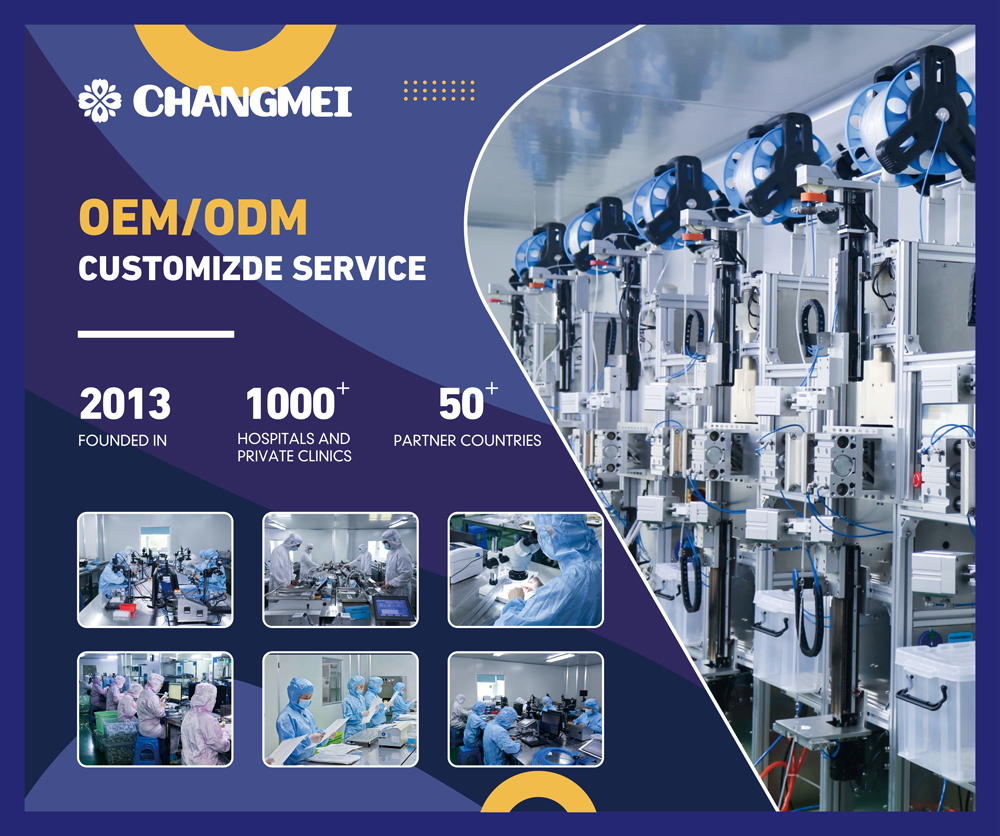
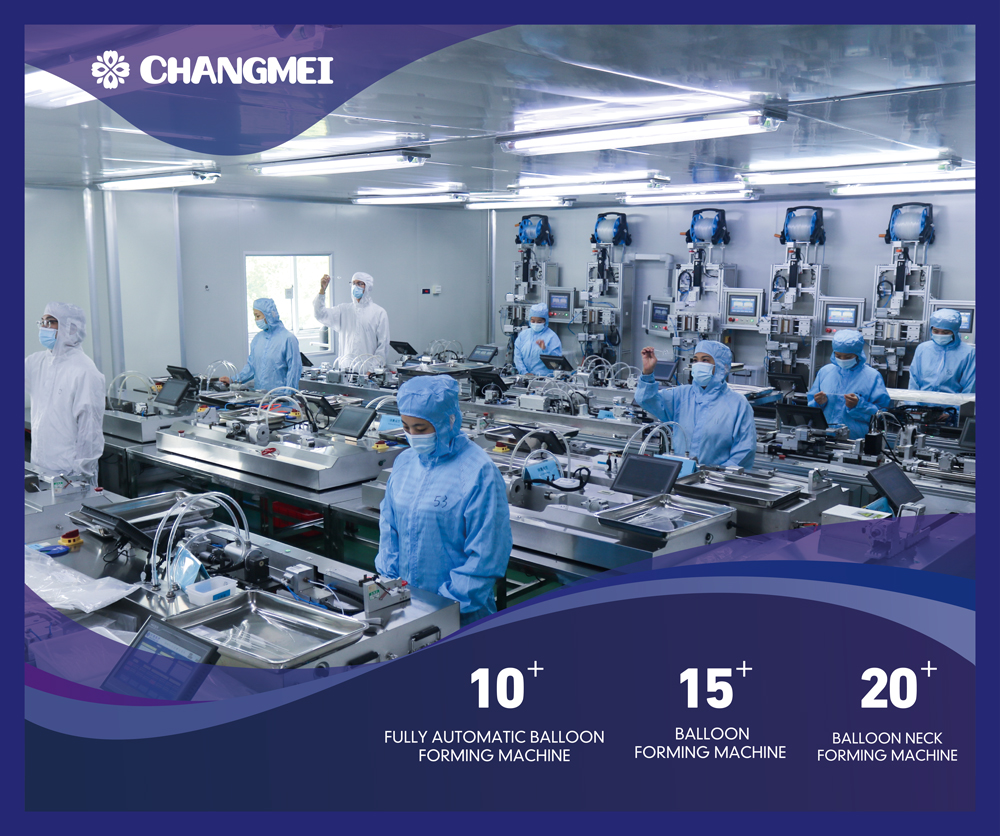
The supply side matters for the same reason. CHANGMEI — Jiangsu Changmei Medtech Co., Ltd., established in 2013 and headquartered in Jiangsu, China — manufactures kyphoplasty balloon catheters in a 51,985 m² facility with 235 employees, a 40-engineer R&D team and a stated annual capacity of 1,000,000 balloon catheters, exporting about 30% of output to the EU, USA, Asia, South America and the Middle East. The company states that its kyphoplasty balloon catheters hold roughly 80% of the Chinese market, and it was the first Chinese company to obtain EU MDR CE certification for kyphoplasty system products. Both KB0120 and KB0210S1 come out of that same CE-MDR marked, ISO 13485-certified system, which is precisely why the choice has to be made on configuration rather than on brand.
What both models share — and why that removes the easy answers
Buyers usually start with material and safety specifications, and here those specifications converge. Both models use medical-grade TPU for the balloon, and both use four-wing pleating. Pleating is not cosmetic: the folds control the deflated profile so the balloon can be re-wrapped and withdrawn through the working cannula, and a four-wing pattern distributes the folds around the circumference. Both models are specified with a constrained burst pressure of ≥400 PSI, and both are single-use sterile devices sterilized by ethylene oxide with a three-year shelf life; reuse and re-sterilization are prohibited, and the device should be used promptly once the package is opened.
One distinction belongs in every clinical conversation: constrained burst pressure is a design ceiling, not an operating target. The procedure description for balloon kyphoplasty states that inflation is conducted to a predetermined pressure — typically 50–300 psi depending on vertebral body resistance — while the balloon is monitored under fluoroscopy. A ≥400 PSI constrained burst rating tells the buyer how much margin the balloon construction carries; it does not tell the operator to inflate to that figure. The decision-relevant numbers remain volume, reach, marker spacing and setting.
KB0120: the 6 cc, 315 mm configuration
- Maximum inflation volume: 6 cc
- Overall length: 315 mm
- Channel inner diameter: ≥3.65 mm
- Distance between the two radiopaque markers: 20 mm
- Balloon film: medical-grade TPU with four-wing pleating
- Documented setting: spine surgery
KB0120 is the higher-volume, longer-reach option in this pair. The 6 cc ceiling leaves room to create a larger cavity when the cavity plan calls for it, and the 315 mm length adds 35 mm of shaft over KB0210S1 — relevant when the access trajectory leaves the hub further from the entry point, or when the operator wants more shaft outside the cannula for control. Its ≥3.65 mm channel inner diameter is the larger lumen of the two models, a specification to match against the accessories you intend to pass rather than a performance claim in itself. The 20 mm marker span gives a wider fluoroscopic scale, consistent with the longer inflatable segment that a 6 cc balloon implies.
KB0210S1: the 3 cc, 280 mm, 11G configuration
- Maximum inflation volume: 3 cc
- Overall length: 280 mm
- Size/type: 11G
- Channel inner diameter: ≥3.10 mm
- Distance between the two radiopaque markers: 10 mm
- Balloon film: medical-grade TPU with four-wing pleating; constrained burst pressure ≥400 PSI
- Documented settings: orthopedic surgery, spine surgery, pain management, interventional pain clinics
- Paired accessories: CHANGMEI KT-00-05 11G tool kit and BI-20A-10 balloon inflator (20 cc, 30 atm)
- Regulatory: CE-MDR marked, ISO 13485 certified; US market authorization under FDA 510(k) K223709, Product Code HRX, Class II, 21 CFR 888.1100, cleared 16 August 2023
KB0210S1 is the compact, tighter-reference option. The 3 cc ceiling defines a smaller maximum cavity, the 280 mm length suits a shorter working distance, and the 10 mm marker span gives a finer fluoroscopic reference over a shorter inflatable segment. Its most distinctive commercial feature is that it is documented as one interoperable system with the KT-00-05 11G tool kit and the BI-20A-10 inflator — a 20 cc, 30 atm inflation device — which removes a category of accessory guesswork for clinics that want a single matched set rather than a catheter combined with a kit from mixed sources.
The four decision levers
Lever 1 — Cavity volume: 6 cc vs 3 cc
Maximum inflation volume sets the ceiling of the cavity the balloon can create, and therefore the ceiling of the cement volume you can plan for in a contained cavity. The volume actually used is a clinical decision: it depends on vertebral body size, degree of collapse, endplate integrity and resistance felt during inflation, and the procedure is normally conducted to a predetermined pressure rather than a fixed volume. Read the number as headroom. A 6 cc ceiling keeps larger-cavity plans inside the device's design envelope; a 3 cc ceiling is a hard boundary the cavity plan must respect. Neither number guarantees a height-restoration outcome, and neither establishes superiority over the other for a given patient.
Lever 2 — Catheter reach: 315 mm vs 280 mm
The 35 mm difference changes where the hub sits relative to the access point. Longer shafts help when soft-tissue depth or approach angle raises the working-length requirement, and they give the operator more shaft to manage outside the cannula. Shorter shafts reduce the length of catheter that must be controlled and stabilised, which many clinic-based operators prefer at standard working depths. Reach is best settled from your own case mix — thoracic versus lumbar distribution, typical approach, patient habitus — rather than from general preference, because an over-long catheter is a handling question while an under-long one is a functional limit.
Lever 3 — Marker spacing: 20 mm vs 10 mm
The two radiopaque markers provide a fluoroscopic scale on the balloon itself. A 20 mm span corresponds to a longer inflatable segment and lets the operator judge expansion across a wider reference; a 10 mm span gives a finer, tighter reference over a shorter segment. In a small vertebral body, or when containment and position must be confirmed against a short cavity, the tighter reference is easier to read against the endplates. Match the marker span to the anatomy you treat most often, and note that marker distance tracks the balloon segment — it is not an independent adjustment.
Lever 4 — Clinical setting and system pairing
This is where most procurement decisions resolve. KB0120 is documented for spine surgery, which points to hospital spine programmes and dedicated spine suites. KB0210S1 is documented across orthopedic surgery, spine surgery, pain management and interventional pain clinics, which points to settings where one catheter has to serve a mixed list, and where a matched 11G kit and a 20 cc / 30 atm inflator reduce the number of components a clinic must qualify. If your organisation runs both a hospital spine list and a clinic-based pain list, the setting question becomes a portfolio question rather than a single-SKU question.
Side-by-side specification table
| Parameter | KB0120 | KB0210S1 |
|---|---|---|
| Maximum inflation volume | 6 cc | 3 cc |
| Overall length | 315 mm | 280 mm |
| Size / type | Not stated in the published KB0120 data; confirm in writing | 11G |
| Channel inner diameter | ≥3.65 mm | ≥3.10 mm |
| Radiopaque marker distance | 20 mm | 10 mm |
| Balloon film and pleating | Medical-grade TPU, four-wing pleating | Medical-grade TPU, four-wing pleating |
| Constrained burst pressure | ≥400 PSI | ≥400 PSI |
| Use and sterilization | Single-use, EO sterilized, 3-year shelf life | Single-use, EO sterilized, 3-year shelf life |
| Documented clinical settings | Spine surgery | Orthopedic surgery, spine surgery, pain management, interventional pain clinics |
| Paired accessories | Match accessories to the ≥3.65 mm channel ID and the model IFU | KT-00-05 11G tool kit; BI-20A-10 inflator (20 cc, 30 atm) |
| Regulatory documentation | CE-MDR marked, ISO 13485 certified system | CE-MDR marked, ISO 13485 certified; FDA 510(k) K223709, cleared 16 August 2023 |
Step-by-step: matching KB0120 or KB0210S1 to a procedure
- Screen the indication and contraindications first. The device is not the decision variable here. Balloon kyphoplasty is not applicable for patients with a damaged vertebral posterior edge, nerve injury, infection at the operative site or uncorrectable coagulopathy; the IFU carries the full list and must be read before clinical use.
- Read the imaging before the catalogue. CT or MRI is required to evaluate posterior wall integrity, canal diameter and neural compression, and severe collapse of roughly 75–80% of original height is a relative contraindication. Anatomy determines whether the cavity plan is small or large.
- Set the cavity target, then choose the ceiling. If the plan needs more than 3 cc of headroom, KB0210S1 falls outside its design envelope and KB0120's 6 cc ceiling is the relevant option. If the plan is a smaller contained cavity, the 3 cc ceiling is not a limitation.
- Check reach against the approach. Confirm the 280 mm or 315 mm working length against your typical approach depth and cannula, including how much shaft you want outside the hub.
- Check the fluoroscopic reference. Decide whether the 10 mm or the 20 mm marker span gives your operators the clearer read at the levels you treat most often.
- Confirm accessory interoperability. KB0210S1 is documented with the KT-00-05 11G kit and BI-20A-10 inflator. For KB0120, match the ≥3.65 mm channel inner diameter to the access kit and inflation device you intend to use, and confirm the combination in the model IFU.
- Verify the paperwork for your market. Confirm that the exact catalogue number appears in the certificate scope for your jurisdiction, and that the IFU, the EO sterilization declaration and the three-year shelf-life statement match the shipment.
- Set the inventory split and reorder point. If both models are stocked, write the decision rule down — cavity ceiling first, then reach, then marker span — so reordering does not default to whichever SKU was bought last.
Use cases: three stocking scenarios
These are conditional planning scenarios, not reports of specific customer projects.
- Hospital spine programme with larger cavities and deeper approaches: KB0120's 6 cc ceiling and 315 mm length keep higher-volume, longer-reach cases inside one device envelope, with a 20 mm marker span for a wider fluoroscopic read. Verify accessory fit against the ≥3.65 mm channel inner diameter.
- Pain management or interventional pain clinic with a mixed list: KB0210S1's 3 cc ceiling, 280 mm length, 11G size and 10 mm marker span suit a shorter working distance and tighter reference, and the documented KT-00-05 / BI-20A-10 pairing keeps the component set matched across orthopedic, spine and pain cases.
- Distributor or OEM buyer building a portfolio: carry both and publish the decision rule. The two models cover opposite ends of the volume and reach range without duplicating the shared TPU, four-wing pleating and ≥400 PSI specification, which keeps a portfolio compact while covering both hospital and clinic demand.
Limitations and what the specifications do not tell you
Three boundaries are worth stating plainly. First, the published specification set contains no head-to-head clinical outcome comparison between KB0120 and KB0210S1, so the choice is a configuration match rather than a demonstrated performance difference; relative clinical claims should be treated as unverified until your own evaluation or published evidence supports them. Second, maximum inflation volume is a device ceiling and does not predict the cavity volume achieved in a given vertebra, which depends on bone quality and resistance. Third, gauge, price and order-specific lead time are not universal constants: the KB0120 published data supplied here does not state a size/type, and neither model carries a published list price or guaranteed delivery time, so both should be confirmed in writing in the quotation.
CHANGMEI's positioning of its kyphoplasty system as an alternative to international premium brands at a more competitive price point is a supplier statement rather than a measured comparison; treat it as a reason to request a like-for-like quotation, not as a conclusion.
FAQ
Are KB0120 and KB0210S1 single-use, and how are they sterilized?
Yes. The KB-Series kyphoplasty balloon catheter is a single-use sterile medical device and reuse is prohibited. It is sterilized by ethylene oxide (EO) and carries a three-year shelf life; the device should be used immediately once the package is opened, and it must not be re-sterilized or reused. Always follow the official IFU supplied with the specific model and lot.
Which market clearances apply to each model?
KB0210S1 is documented as a single-use, CE-MDR marked and ISO 13485-certified inflatable bone tamp, with US market authorization under FDA 510(k) K223709, Product Code HRX, Class II, 21 CFR 888.1100, cleared on 16 August 2023. CHANGMEI's kyphoplasty system holds EU MDR CE, US FDA 510(k) clearance and NMPA Class II/III certification, and the company was the first Chinese manufacturer to obtain EU MDR CE certification for kyphoplasty system products. Because certificates name specific models and configurations, confirm that the exact catalogue number you order appears in the certificate scope and IFU for your market before the order is released.
Is a 3 cc balloon enough for a lumbar vertebral body, or do we need the 6 cc model?
The maximum inflation volume is a ceiling, not a target. The volume actually used is set by vertebral anatomy, endplate integrity, balloon resistance and the treating clinician's cavity plan; the procedure is described as inflation to a predetermined pressure — typically 50–300 psi depending on vertebral resistance — rather than to a fixed volume. Where the plan requires more cavity headroom, KB0120's 6 cc ceiling provides it. Where the plan is a smaller, contained cavity, KB0210S1's 3 cc ceiling is the constraint to plan around rather than a functional shortfall.
Can both models run on the same tool kit and inflator?
KB0210S1 is documented to pair with the CHANGMEI KT-00-05 11G tool kit and the BI-20A-10 balloon inflator (20 cc, 30 atm) as one interoperable vertebral augmentation system, which reduces accessory guesswork. KB0120 has a channel inner diameter of ≥3.65 mm, so confirm that the access kit and inflation device you plan to use match that lumen and the model IFU before you standardise one kit across both models.
Which model is more cost-effective for a mixed case load?
Neither model carries a published list price, so cost-effectiveness has to be built from your own quotation, kit configuration and case mix rather than from a specification table. CHANGMEI positions its kyphoplasty system as an alternative to international premium brands at a more competitive price point, which is a supplier position rather than a measured comparison. In US ASC settings, the 2025 Medicare ASC final rate for kyphoplasty (CPT 22513, 22514) was approximately USD 3,510.84, so per-case economics are sensitive to instrument and implant cost per treated level. Request both SKUs quoted with identical kit and inflator content so the comparison is like for like.
Can we evaluate both models before committing to one?
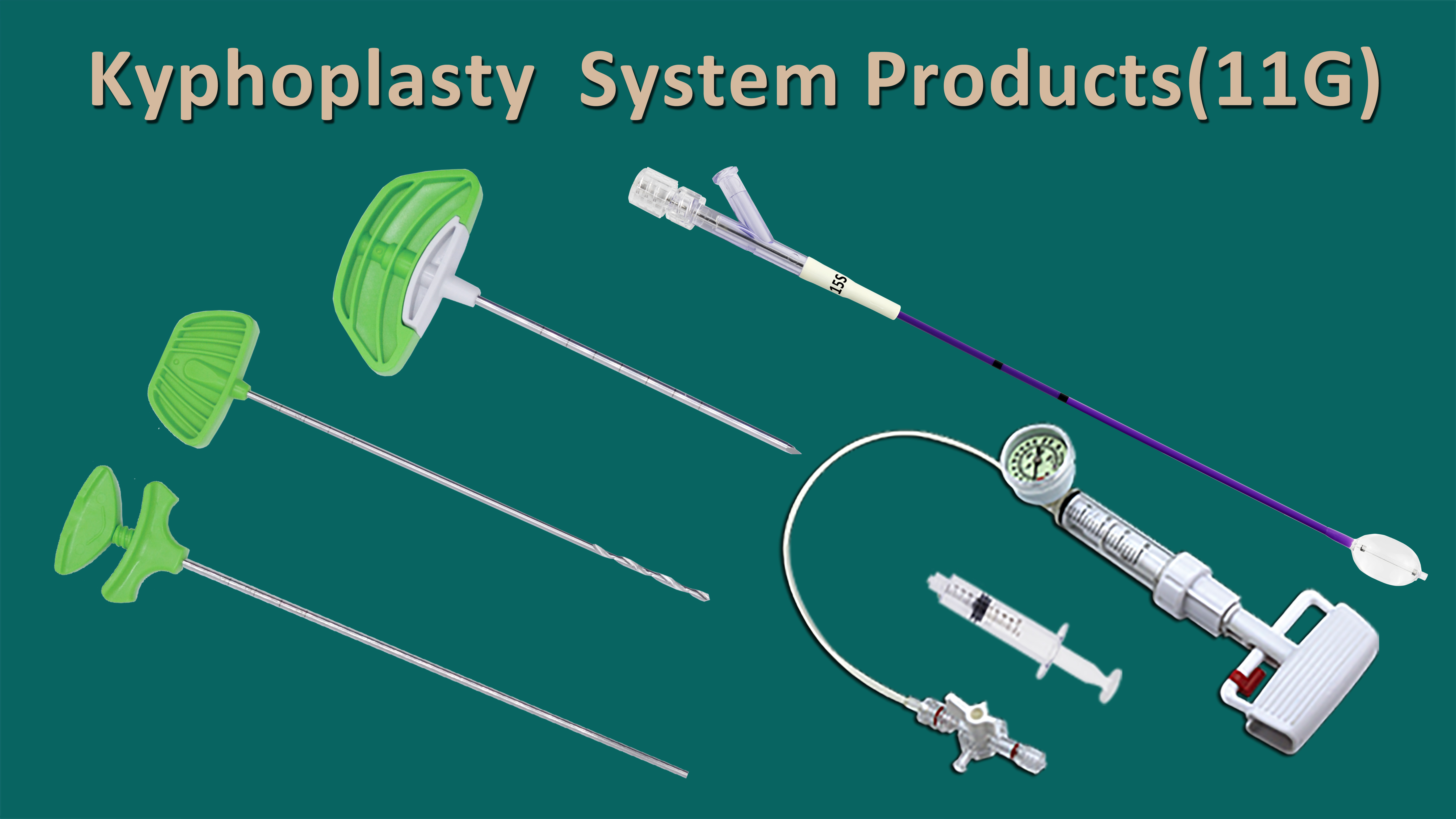
Evaluation terms are market-specific, so ask what is available for your country rather than assuming a standard sample programme. A practical evaluation pack contains the model-specific IFU, certificate scope covering the exact catalogue number, the EO sterilization and three-year shelf-life statement, and the accessory pairing confirmation for the KT-00-05 tool kit and BI-20A-10 inflator. The kyphoplasty system product brochure covering 8G and 11G configurations with CE and FDA references can be downloaded from the link below.
What delivery planning should we expect?
CHANGMEI's documented capacity is 1,000,000 kyphoplasty balloon catheters per year from a 51,985 m² facility with 235 employees, and about 30% of output is exported to the EU, USA, Asia, South America and the Middle East. Those figures describe capacity and market coverage, not a guaranteed lead time for a specific order. Confirm the scheduled delivery date, the remaining shelf life at delivery and the batch documentation in the quotation; because both models are EO sterilized with a three-year shelf life, remaining shelf life at receipt is a legitimate ordering question.
Conclusion
KB0120 and KB0210S1 are not two versions of the same purchase. They are two configurations of one platform, and the platform's shared values — medical-grade TPU, four-wing pleating, a ≥400 PSI constrained burst specification, EO sterilization and a three-year shelf life — are exactly why the decision has to rest on the four numbers that differ: 6 cc versus 3 cc of maximum inflation volume, 315 mm versus 280 mm of overall length, 20 mm versus 10 mm of radiopaque marker spacing, and spine surgery versus a setting mix that adds orthopedic surgery, pain management and interventional pain clinics.
Work through it in that order: start from the cavity plan, check reach against your approach, check which fluoroscopic reference your operators read more easily, then confirm the accessory set and the certificate scope for your market. Buyers who write that sequence down end up with a portfolio that covers both ends of the range without duplicating the specification in between.
For full configuration details, download the KYPHOPLASTY System Products (8G & 11G) — CE and FDA brochure, and send model-specific quotation, documentation or evaluation requests to the CHANGMEI team through the official website.
Have Questions or Need More Details?
Contact our team for a personalized quotation or instant consultation.
Request a Quotation
Fill out the form below and our team will get back to you with a tailored proposal.
WhatsApp Direct Chat
Prefer to chat in real-time? Message us on WhatsApp for instant assistance & quick answers.
- Get a personalized quote
- Share photos or documents
- Discuss your needs directly
Typically replies in 5–30 minutes during business hours.