Kyphoplasty Device Lifetime Support: Your FAQ on Sterilization and Shelf-Life
A kyphoplasty program does not end when the first case is scheduled. Months later, distributors, hospital spine teams and OEM buyers keep asking the same cluster of questions: can this device be reused, how is it sterilized, how long can it stay on the shelf, and who guarantees the next shipment. This FAQ answers those questions for the CHANGMEI Kyphoplasty range, using device-level facts for the single-use balloon catheter KB0115S1 and the wider percutaneous kyphoplasty (PKP) system.
Direct answer: The CHANGMEI kyphoplasty balloon catheter is a single-use sterile medical device and re-use is prohibited. It is sterilized by ethylene oxide (EO) and carries a 3-year shelf life. Use it immediately once the package is opened. Do not re-sterilize or reuse it, and always follow the official IFU instruction manual.
What "Lifetime Support" Means for a Single-Use Device
For an implant or an instrument set that is reprocessed, lifetime support usually means service, repair and calibration. For a sterile single-use catheter, that definition does not apply. Lifetime support instead means three deliverables that must hold for as long as the program runs:
- A sterile, in-date unit for every procedure. Every case requires an unopened, EO-sterilized device within its 3-year shelf life window.
- An identical specification on every reorder. A restocked KB0115S1 must match the gauge, working length and volume the clinical team was trained on.
- Documentation that stays valid in each market. CE-MDR marking, FDA clearance and quality-system certificates have to line up with the lot being delivered.
Seen this way, the support question is really a supply question: who keeps producing, testing, sterilizing and shipping the same device, and how is stock rotated so nothing expires before it is used.
Why These Four Questions Keep Coming Back
Decision-stage buyers rarely ask about a kyphoplasty balloon catheter in isolation. They ask because procurement mistakes in this category are expensive and hard to reverse.
Question 1 — Is the device reusable?
No. Re-use of the kyphoplasty balloon catheter is prohibited. A hospital that plans its budget on the assumption of reprocessing will need to rebuild the cost model once the IFU is reviewed.
Question 2 — How is it sterilized?
Ethylene oxide (EO). EO is a terminal, factory-controlled process; it is not something a hospital sterile services department can repeat on an opened device.
Question 3 — How long can we stock it?
The balloon catheter carries a 3-year shelf life. That is long enough to support buffer stock, but short enough that a program running on multi-pallet orders needs a rotation rule, not just a purchasing rule.
Question 4 — Who is accountable over the life of the program?
This is where a trading intermediary and a manufacturing partner diverge. A trading label can ship a first order quickly; a vertically integrated factory is the entity that still controls balloon forming, assembly and release testing several years later.
Industry Background: Why Restocking Discipline Matters More Now
Kyphoplasty volumes are tied to vertebral compression fracture treatment, and the device market that serves them is expanding. The global kyphoplasty market was valued at USD 764.13 million in 2025 and is projected to reach USD 1,342.29 million by 2034. North America held a revenue share of 42.5% to 50.0% in 2025, making it the largest single regional pool of demand.
Reimbursement shapes how that demand is served. The 2025 Medicare Ambulatory Surgical Center rate for kyphoplasty (CPT 22513 and 22514) was set at approximately USD 3,510.84, a 3.5% increase over 2024. When the procedure payment is fixed at that level, the consumable cost per case becomes a visible line in the program budget — which is exactly why buyers move from premium-brand purchasing to factory-direct sourcing, and why they then need a partner who can sustain the supply position they have chosen.
Two structural consequences follow. First, high-volume distributors need predictable replenishment rather than one-off shipments. Second, ambulatory surgery centers and pain clinics that order in smaller batches need short, reliable reorder cycles so stock does not age out. Both scenarios are shelf-life problems before they are pricing problems.
The Device-Level Facts: Single-Use, EO, Three-Year Shelf Life
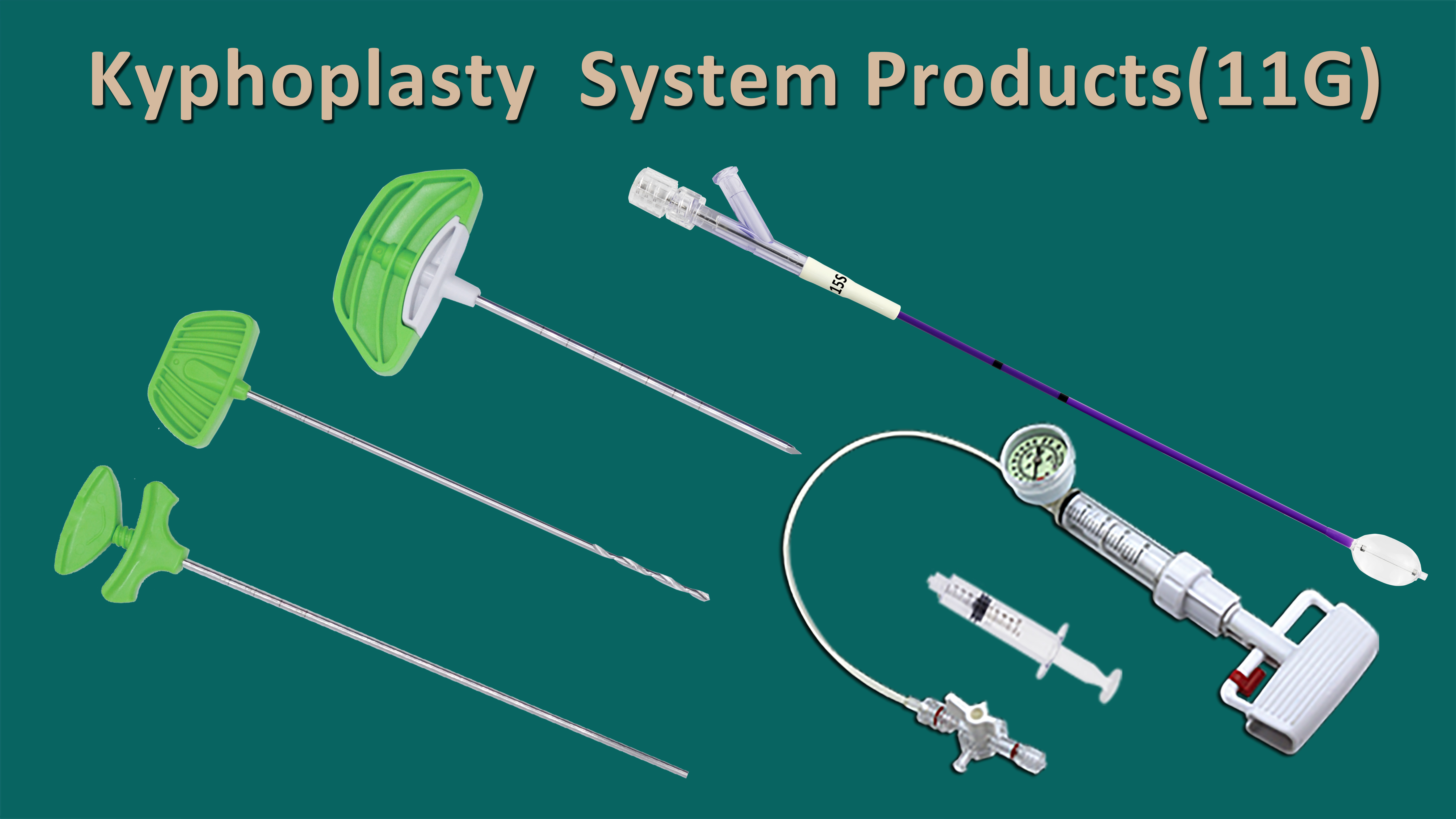
Jiangsu Changmei Medtech Co., Ltd. is a vertically integrated medical device manufacturer established in 2013 and headquartered in Jiangsu, China, producing minimally invasive surgical instruments including kyphoplasty balloon catheters, kyphoplasty tool kits and balloon inflators. Its kyphoplasty balloon catheters are built from medical-grade thermoplastic polyurethane (TPU) on a PU shaft, with radiopaque markers and a stainless-steel stylet; handle components use polycarbonate, and each device is EO-sterilized for single use.
Model KB0115S1 illustrates how the specification and the single-use status travel together. It is an 11G balloon catheter with a 280 mm overall length, a channel inner diameter of ≥3.10 mm, a maximum volume of 4 cc and a constrained burst pressure of ≥400 PSI. It is CE-MDR marked, ISO 13485 certified and cleared for the U.S. market under FDA 510(k) K223709 (Product Code HRX, Class II, 21 CFR 888.1100, cleared August 16, 2023).

Sterilization and shelf-life facts across the single-use range
| Device | Model | Size / key spec | Sterilization | Reuse status | Stated shelf life |
|---|---|---|---|---|---|
| Kyphoplasty Balloon Catheter | KB0115S1 | 11G · 280 mm · channel ID ≥3.10 mm · 4 cc max · ≥400 PSI | Ethylene oxide (EO) | Single-use; re-use prohibited | 3 years |
| Kyphoplasty Balloon Catheter | KB0210S1 | 11G · 280 mm · channel ID ≥3.10 mm · 3 cc max · ≥400 PSI | Ethylene oxide (EO) | Single-use; re-use prohibited | 3 years (balloon catheter IFU) |
| Kyphoplasty Balloon Catheter | KB0120 | 8G · 315 mm · channel ID ≥3.65 mm · 6 cc max · ≥400 PSI | Ethylene oxide (EO) | Single-use; re-use prohibited | 3 years (balloon catheter IFU) |
| Kyphoplasty Tool Kit | KT-00-05 (11G) | 2 puncture expandor modules, 1 bone drill, 6 bone cement filling devices | Supplied sterile, single-use | Single-use | Refer to product label / IFU |
| Balloon Inflator | BI-20A-10 | 20 cc nominal capacity · 30 atm maximum pressure · 10 ml syringe | EO sterilized | Single-use | Refer to product label / IFU |
The KB0210S1 balloon film uses a four-wing pleating process, which is one reason the deflated profile can be reintroduced through the working channel reliably. The tool kits use 06Cr19Ni10 medical-grade stainless steel for most metal parts, with 32Cr13Mo stainless steel for the puncture stylet and puncture expandor cutting tips, and joint connection strength rated at not less than 100 N.
How a Manufacturer Actually Supports a Multi-Year Program
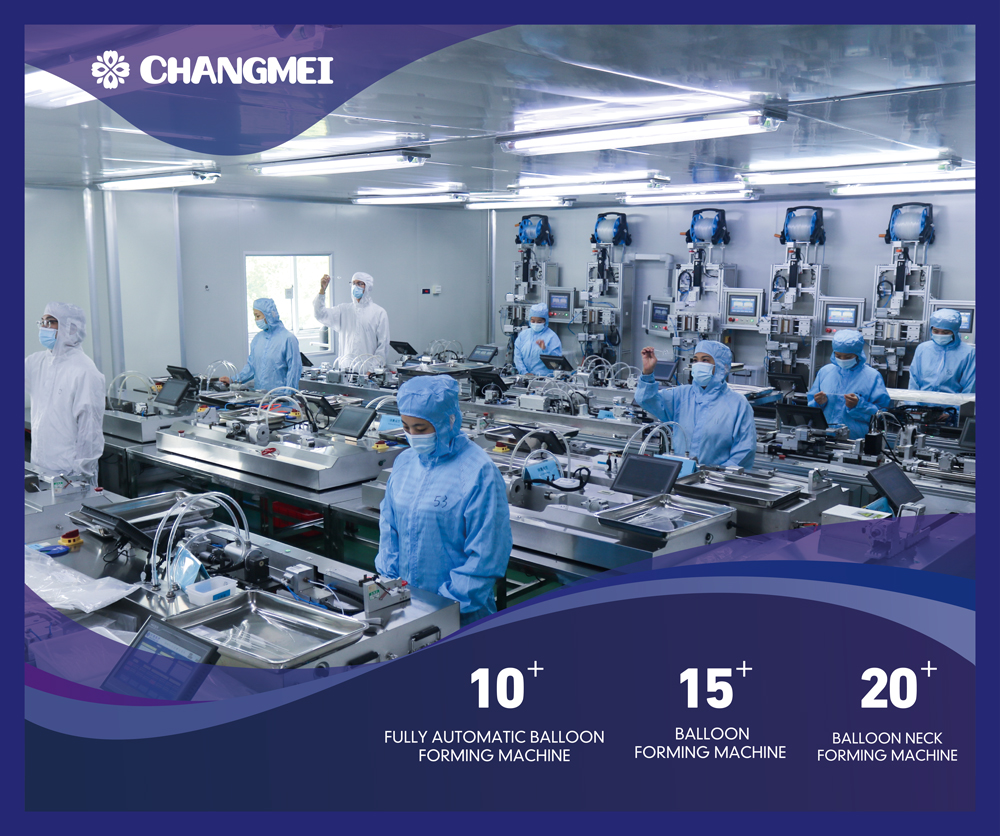
Supply continuity in this category is a capacity-and-control question. Changmei operates a 51,985 m² facility with 235 employees, including a 40-engineer R&D team, and reports an annual output of 1,000,000 units of kyphoplasty balloon catheter. Assembly runs in an ISO Class 7 cleanroom under an ISO 13485 certified quality system audited by TÜV SÜD. Balloon forming, necking, welding, folding and leak testing are performed on self-developed equipment rather than outsourced molding, which keeps process control inside the same organization that holds the regulatory files.
Scale is reported at approximately 80% of China's PKP balloon catheter market, and the company states it is audited as a supplier to member companies of Medtronic and Stryker. For a distributor, the practical reading is narrower and more useful: an organization of this size can absorb a volume increase mid-program without changing the device design or the release-testing route, and it can supply the same model family for years — which is what a shelf-life rotation plan depends on.
Market coverage matters too. Roughly 30% of output is exported, with main markets in the EU, USA, Asia, South America and the Middle East. A distributor working across more than one of those regions can hold a single technical file structure and a single specification baseline rather than managing parallel sources.
Step-by-Step: Building a Restocking and Shelf-Life Control Workflow
The workflow below converts the device facts into an operational routine. It is the sequence a distributor or hospital procurement team can apply to a new kyphoplasty program and repeat at every reorder.
Step 1 — Fix the model and gauge before fixing the price
Start from the clinical routine. An 11G system such as KB0115S1 (280 mm, channel ID ≥3.10 mm, 4 cc) pairs with the KT-00-05 11G tool kit; an 8G system such as KB0120 (315 mm, channel ID ≥3.65 mm, 6 cc) pairs with the KT-00-01 8G kit. Model decisions drive everything downstream, including how much stock of each configuration is sensible.
Step 2 — Confirm single-use status on the label, not on memory
Check that the unit is marked single-use and EO-sterilized, and that the IFU shipped with the lot is the version your clinical team was trained on. Re-use and re-sterilization are explicitly prohibited.
Step 3 — Set a shelf-life-aware rotation rule
With a 3-year shelf life on the balloon catheter, adopt first-in-first-out issuing and set a minimum remaining-shelf-life threshold for what enters the clinical store. Stock that falls below the threshold should be routed to the highest-turnover site rather than left in a low-volume location.
Step 4 — Treat catheter, kit and inflator as one system
KB0210S1 is engineered to pair with the Changmei KT-00-05 11G tool kit and the BI-20A-10 balloon inflator (20 cc, 30 atm) as one interoperable vertebral augmentation system. Ordering these as a matched set prevents a situation where catheters are in stock but the correct gauge kit or the inflator is not.
Step 5 — Archive the compliance file with each lot
Keep CE-MDR marking documentation, FDA 510(k) K223709 evidence for the cleared models, and ISO 13485 / TÜV SÜD quality-system certificates together with the delivery record. In a tender or an audit, the question is not whether the manufacturer holds the certificate, but whether the specific lot you received is covered by it.
Step 6 — Agree a replenishment cadence with the factory, not the reseller
Set the reorder point and the review interval directly with the manufacturer. With 1,000,000-unit annual balloon catheter output and in-house balloon forming, a production slot can be reserved ahead of peak case months instead of being requested after stock has already run low.
Where This Matters: Three Program Profiles
Hospital and spine-center distributors
High case volume and multiple surgeons mean several gauges in simultaneous use. The controlling risk is a mixed inventory where 11G KB0115S1 units age out while 8G demand rises. A distributor covering tertiary hospitals typically holds a matched catheter-and-kit profile per surgeon preference and reviews remaining shelf life quarterly.
Ambulatory surgery centers and interventional pain clinics
Lower volumes but the same single-use rule. Here the risk is over-ordering a configuration that is used once a month. Smaller, more frequent replenishment from a manufacturer with in-house production is more suitable than a large one-off shipment that consumes its 3-year window on the shelf.
OEM and private-label partners
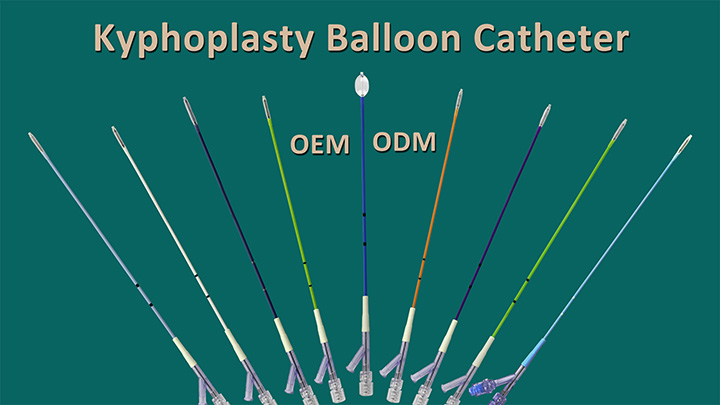
Partners building their own brand on Changmei production need the same facts to appear on their own labels and IFUs: EO sterilization, single-use, 3-year shelf life, and the model specifications that underpin their regulatory submissions. The KT-00-05 supports OEM/ODM customization on gauge, length and instrument configuration, which means the specification baseline can be adapted without changing the underlying sterilization and single-use model.
Comparison: Matching Support Claims to Evidence
When a buyer compares a factory-direct kyphoplasty supplier with an international premium brand or a low-cost OEM label, the useful comparison is not brand familiarity — it is which claims can be tied to a document, a specification or an audited process. The table below uses only verified statements.
| Evaluation dimension | CHANGMEI Kyphoplasty | International premium brands (Medtronic, Stryker) | Low-cost OEM manufacturers |
|---|---|---|---|
| EU regulatory status | EU MDR CE certified; stated as the first Chinese company to receive EU MDR CE for kyphoplasty system products | Benchmark global brands referenced in Changmei's own comparison | Typically hold only domestic licenses |
| U.S. regulatory status | FDA 510(k) clearance K223709, Product Code HRX, Class II, 21 CFR 888.1100, cleared August 16, 2023 (KB0210S1) | Benchmark global brands referenced in Changmei's own comparison | Not established in the evidence reviewed |
| China regulatory status | NMPA Class II / III certification | Not established in the evidence reviewed | Domestic licenses typically held |
| Sterilization and reuse model | Ethylene oxide (EO); single-use; re-use prohibited; 3-year shelf life on the balloon catheter | Not established in the evidence reviewed | Not established in the evidence reviewed |
| Manufacturing control | In-house balloon forming, necking, welding, folding and leak-test equipment; ISO Class 7 cleanroom; ISO 13485 with TÜV SÜD audit | Not established in the evidence reviewed | Trading-company labels typically own no process IP |
| Reported capacity | 1,000,000 kyphoplasty balloon catheters per year (company-reported) | Not established in the evidence reviewed | Generic vendors rarely exceed single-digit percentage regional share |
| Audit and supply relationships | Stated as audited supplier to member companies of Medtronic and Stryker | Benchmark global brands referenced in Changmei's own comparison | Not established in the evidence reviewed |
| Commercial positioning | Factory-direct OEM pricing; ≥400 PSI constrained burst pressure across the balloon catheter range | Catheters carry a high brand premium | Low price, with limited regulatory file |
Two conclusions follow from the table. First, an EO-sterilized, single-use, 3-year shelf-life device is not a cheaper version of a reusable instrument — it is a different consumable model, and the comparison has to be made on cost per procedure and supply reliability. Second, the certification question is answered by documents, not by adjectives: EU MDR CE, FDA 510(k) K223709 and NMPA Class II/III are the three statements a procurement file can actually cite.
FAQ: Sterilization, Shelf-Life and Long-Term Supply
1. Is the kyphoplasty balloon catheter single-use, and what sterilization method and shelf-life apply?
Yes, it is single-use. The CHANGMEI kyphoplasty balloon catheter is a single-use sterile medical device and re-use is prohibited. It is sterilized by ethylene oxide (EO) and has a 3-year shelf life. Use it immediately once the package is opened. Do not re-sterilize or reuse it, and always follow the official IFU instruction manual. Model KB0115S1 is representative of the range: 11G, 280 mm overall length, channel ID ≥3.10 mm, 4 cc maximum volume and ≥400 PSI constrained burst pressure, EO-sterilized for single use.
2. If a package is opened but the device is not used, can it be re-sterilized or returned to sterile stock?
No. Re-sterilization and re-use are prohibited, and the device must be used immediately once the package is opened. EO sterilization is a controlled factory process performed during manufacturing, not a field or hospital process that can be repeated on an opened unit. The same discipline applies to the accessory items: the balloon inflator and the tool kit components are supplied as single-use sterile items. Before any case, the IFU should also be reviewed for contraindications, which include a damaged vertebral posterior edge, nerve injury, infection at the operative site and uncorrectable coagulopathy.
3. How does CHANGMEI support continuous restocking over a multi-year kyphoplasty program?
Through manufacturing capacity and process control held in-house. Changmei operates a 51,985 m² facility with 235 employees and a 40-engineer R&D team, and reports an annual output of 1,000,000 units of kyphoplasty balloon catheter. Balloon forming, necking, welding, folding and leak testing use self-developed equipment, and assembly takes place in an ISO Class 7 cleanroom under an ISO 13485 certified quality system audited by TÜV SÜD. The company reports approximately 80% of China's PKP balloon catheter market and states it is audited as a supplier to member companies of Medtronic and Stryker. With roughly 30% of output exported to the EU, USA, Asia, South America and the Middle East, distributors can plan reorders against a single specification baseline.
4. How should a procurement team compare program cost against premium-brand devices?
Compare cost per procedure against the same performance specification, not against brand familiarity. The CHANGMEI balloon catheter range is specified at ≥400 PSI constrained burst pressure across models, and KB0210S1 holds FDA 510(k) clearance K223709 together with CE-MDR marking and ISO 13485 certification. Premium-branded catheters from Medtronic and Stryker carry a high brand premium, whereas Changmei supplies the same class of specification at factory-direct OEM pricing, which is where bulk-procurement cost savings come from. The comparison becomes meaningful once shelf life, single-use status and restocking reliability are included alongside unit price.
5. What should a distributor verify on a sample lot before committing to a restocking agreement?
Check five things on the physical sample. First, the model and gauge on the label must match the intended clinical routine — for example 11G KB0115S1 or 8G KB0120. Second, the single-use marking and EO sterilization statement must be present. Third, the expiry date must confirm remaining shelf life inside your rotation threshold, since the balloon catheter carries a 3-year shelf life. Fourth, the IFU version must be the one your team is trained on, including the contraindication list. Fifth, the lot must be traceable to the CE-MDR and ISO 13485 documentation, with FDA 510(k) K223709 evidence where the cleared model is being supplied. You can request a sample, a quotation, or the current product catalogue directly from the CHANGMEI team at cyz@czmed.com or via WhatsApp on +86 138-1368-7682, and confirm accessory compatibility for the KT-00-05 11G kit and BI-20A-10 inflator (20 cc, 30 atm) at the same time.
Plan the Next Restocking Cycle with CHANGMEI
Jiangsu Changmei Medtech Co., Ltd. manufactures CE-MDR marked and FDA-cleared kyphoplasty balloon catheters, tool kits and balloon inflators at its 51,985 m² facility in Changzhou, Jiangsu, China. For distributors, hospital spine programs and OEM partners planning a multi-year supply schedule, the technical file and full model specification are the fastest starting point.
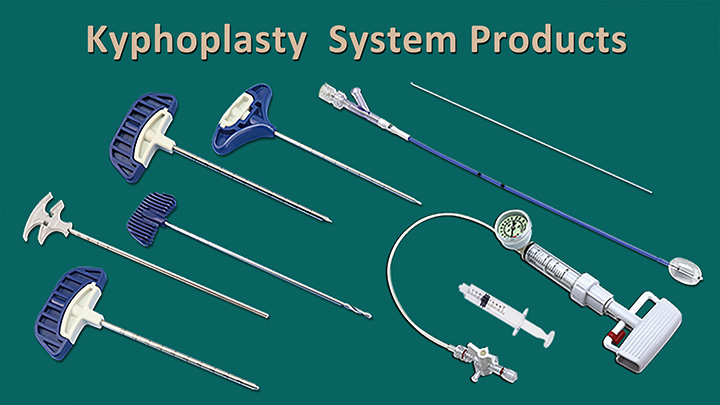
Download the kyphoplasty system catalogue (8G & 11G, CE and FDA): Kyphoplasty System Products (8G & 11G) — CE and FDA
Contact: Mark · Email cyz@czmed.com · Tel / WhatsApp +86 138-1368-7682 · No.27 Xinke West Road, Luoyang Town, Wujin District, Changzhou, Jiangsu, China · www.czmed.com
Conclusion: Lifetime Support Is a Supply Discipline, Not a Service Contract
For a single-use kyphoplasty balloon catheter, the lifetime of the product is governed by three fixed facts: it is EO-sterilized, it is single-use with re-use and re-sterilization prohibited, and it carries a 3-year shelf life with immediate use required once the package is opened. Nothing in the clinical workflow changes those rules, so the support question has to be answered on the supply side.
That places the emphasis on the partner behind the label. A manufacturer that controls balloon forming, cleanroom assembly, release testing and its own regulatory files can keep a specification stable across years of reorders — and can document it for every lot. Jiangsu Changmei Medtech Co., Ltd., established in 2013, holds EU MDR CE, FDA 510(k) clearance K223709 and NMPA Class II/III certification for its kyphoplasty range, and reports an annual capacity of 1,000,000 balloon catheters. For a distributor or hospital program, those facts translate into a straightforward procurement rule: verify the sterilization and single-use status on the lot, manage stock against the 3-year shelf life, and place the restocking relationship with the factory that produces the device.
Have Questions or Need More Details?
Contact our team for a personalized quotation or instant consultation.
Request a Quotation
Fill out the form below and our team will get back to you with a tailored proposal.
WhatsApp Direct Chat
Prefer to chat in real-time? Message us on WhatsApp for instant assistance & quick answers.
- Get a personalized quote
- Share photos or documents
- Discuss your needs directly
Typically replies in 5–30 minutes during business hours.