
How to Read Kyphoplasty Balloon Catheter Specs: PSI, Marker Span, Channel ID
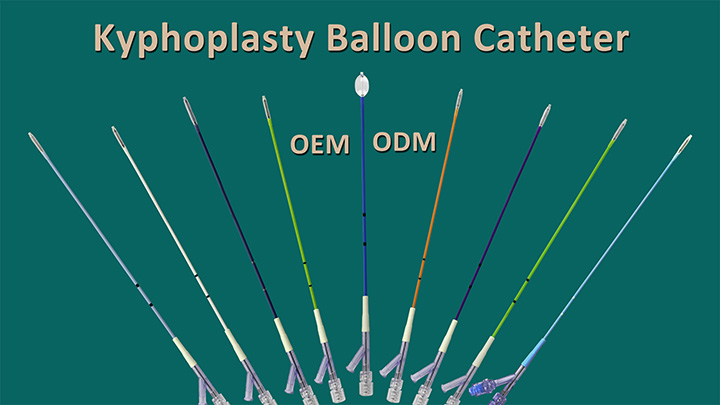
Answer first: a kyphoplasty balloon catheter is defined by six values that must agree with everything else on the tray — constrained burst pressure, radiopaque marker distance, channel inner diameter, maximum inflation volume, overall length and gauge. In the CHANGMEI KB series every model is rated at ≥400 PSI constrained burst pressure, but the range splits into an 11G family (channel ID ≥3.10 mm, 280 mm overall length, 3 cc to 6 cc maximum volume) and an 8G family (channel ID ≥3.65 mm, 315 mm overall length, 4 cc to 6 cc). Marker distance is the one value that moves independently inside each family: 10 mm, 15 mm or 20 mm.
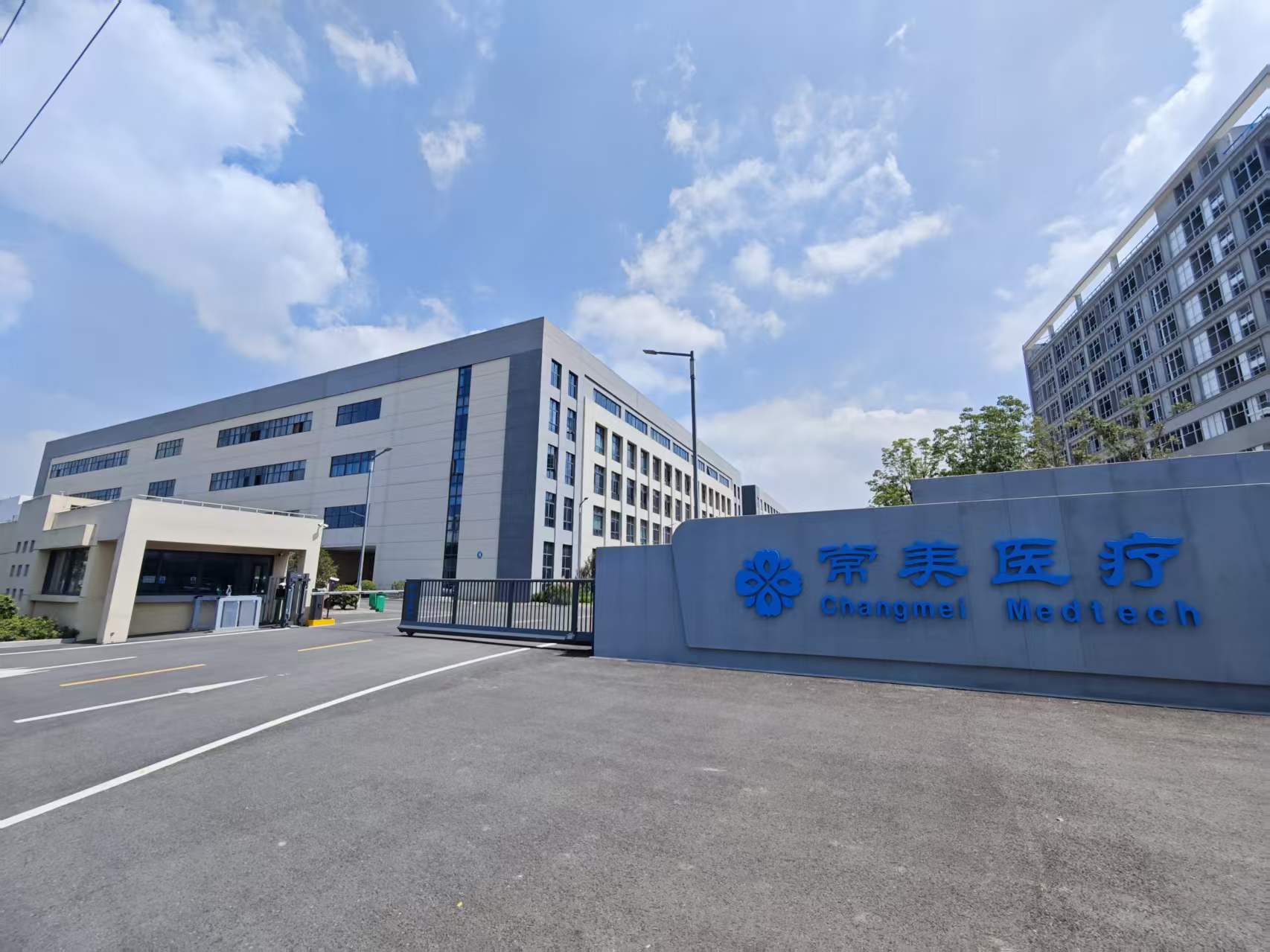
This guide is written for procurement managers, clinical engineers and distributor product managers who are past the discovery stage and are now comparing datasheets line by line. It does not rank suppliers. It maps each specification in the KB-series datasheet to the decision it actually controls, then converts those decisions into a purchase specification and an acceptance checklist you can send to any supplier — including Jiangsu Changmei Medtech Co., Ltd. (CHANGMEI), the Jiangsu, China-based manufacturer founded in 2013 that produces kyphoplasty balloon catheters, kyphoplasty tool kits and balloon inflators, and markets them as CHANGMEI Kyphoplasty systems.
The Real Mismatch Problem: Specs That Read Correctly and Still Fail at the Tray
Most balloon catheter catalogues are organised around a single shorthand: “10 mm balloon”, “15 mm balloon”, “11G balloon”. That shorthand hides four independent variables. Two catheters can both be labelled “11G, 10 mm” and still differ in maximum volume, channel inner diameter and overall length — and those three differences decide whether the catheter works with the rest of the tray.
The mismatch risk has four predictable sources:
- Gauge is confused with size. The gauge refers to the access gauge of the instrument set, not to balloon width. A gauge that is mismatched with the tool kit produces a catheter that cannot be introduced through the cannula, regardless of how good the balloon is.
- Channel ID is treated as a detail. The channel inner diameter governs what can pass through the catheter shaft after the balloon is deflated — the stylet, the guide wire, the bone cement filling devices. A channel ID smaller than the largest device you intend to pass is a hard stop, not a preference.
- Marker distance is read on the label, not on the image. The two radiopaque markers define the working span of the balloon under fluoroscopy. The label tells you the span; the clinical question is where that span sits relative to the endplates and the posterior wall.
- Documents are assumed to be one folder. On a real PKP shipment, the catheter, the tool kit and the inflator do not necessarily sit under the same certificate. A buyer who accepts “one CE certificate for the whole system” will eventually find a line item without a matching document.
Each of these is testable before purchase. That is the purpose of the parameter model below.
Industry Background: Why PKP Sourcing Moved From Single SKUs to Interoperable Systems
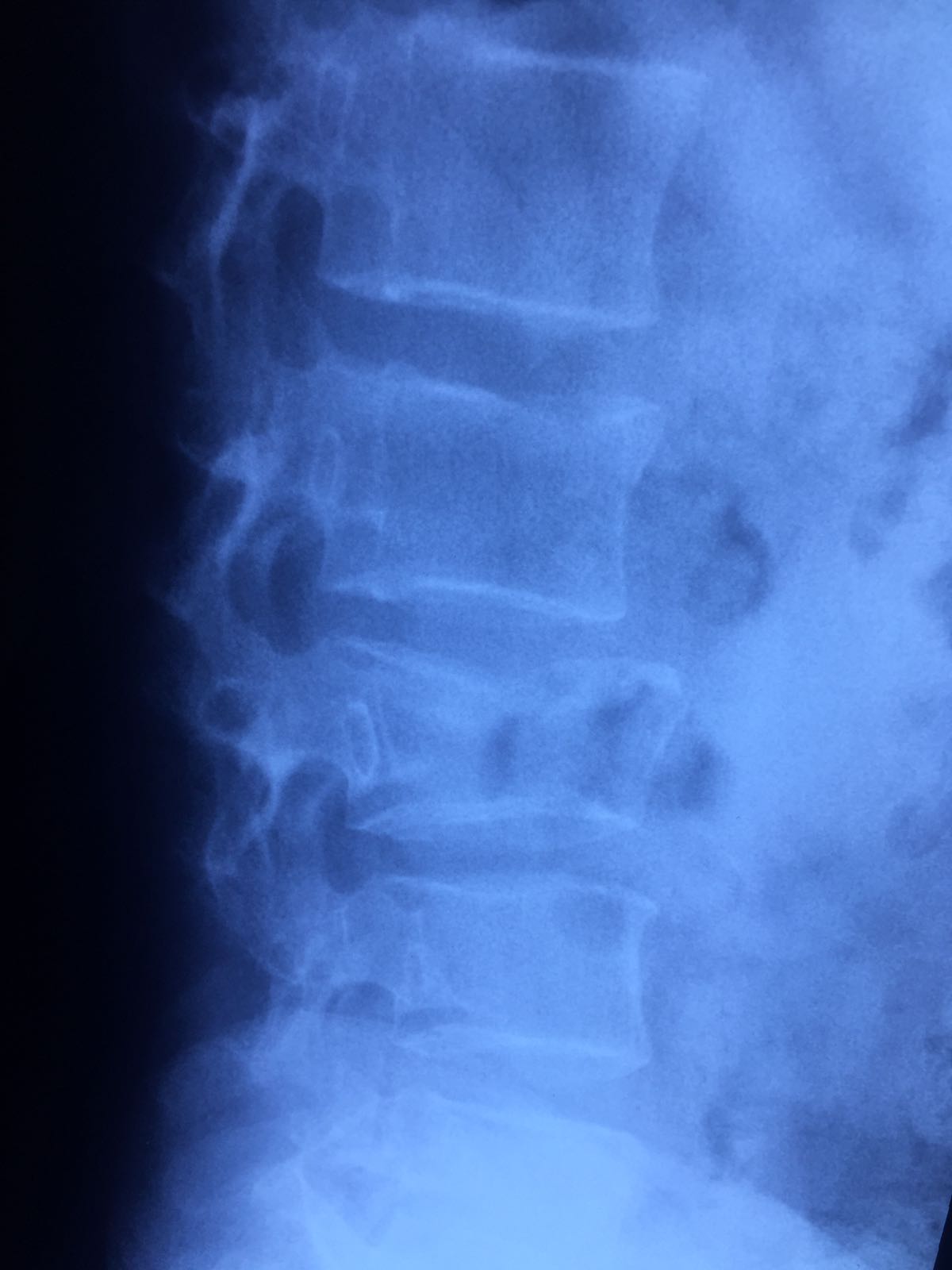
Balloon kyphoplasty is a two-stage minimally invasive procedure. In the first stage, a working cannula is advanced into the fractured vertebral body and an inflatable bone tamp is inserted and inflated with iodinated contrast to a preset pressure — a pressure set by vertebral body resistance rather than by the balloon alone. Inflation displaces cancellous bone outward and creates a contained cavity while partially elevating the endplates. In the second stage the balloon is deflated and removed, and the cavity is filled with low-viscosity PMMA bone cement under low pressure.
Because the two stages use different hardware, the purchasing unit stopped being “a balloon” some time ago. It is now a system: catheter, access and delivery kit, inflator, and the imaging chain that reads the markers.
The commercial context reinforces that shift. The global kyphoplasty market was valued at USD 764.13 million in 2025 and is projected to reach USD 1,342.29 million by 2034, according to market research cited in published analysis, with North America holding a revenue share of 42.5% to 50.0% in 2025. On the reimbursement side, the 2025 Medicare ambulatory surgical center final rate for kyphoplasty under CPT 22513 and 22514 is approximately USD 3,510.84, a 3.5% increase over 2024. Procedural volume plus fixed per-case reimbursement pushes buyers toward standardised trays and reproducible setups — which in practice means buying by parameter, not by product name.
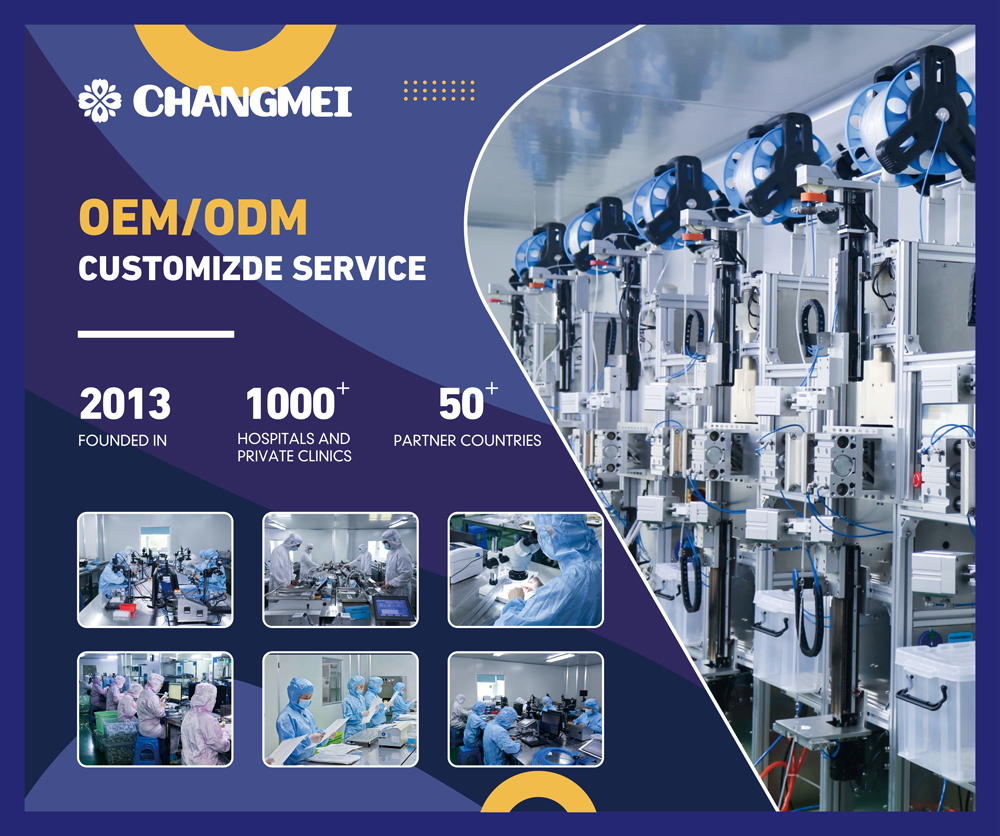
Supplier context. CHANGMEI states that its kyphoplasty balloon catheters account for approximately 80% of the Chinese domestic market for this category, and that it supplies as a qualified vendor to member companies of Medtronic and Stryker. It operates a 51,985 m² facility with ISO Class 7 cleanroom assembly under an ISO 13485-certified quality system, with in-house CNC machining, laser welding and balloon forming, and reports annual kyphoplasty balloon catheter output of 1,000,000 units. These are supplier-stated figures; treat them as background, and verify the specifications and certificates that apply to your specific order.
Parameter by Parameter: What Each Number Actually Controls
1. Constrained burst pressure: ≥400 PSI is a floor, not a working pressure
Constrained burst pressure is measured with the balloon inflated against a mechanical constraint rather than unconstrained. That is the relevant condition inside a vertebral cavity, where the balloon is confined by cancellous bone and the endplates. All six KB-series catheters — KB0210, KB0115, KB0120, KB0210S1, KB0115S1 and KB0120S1 — are specified at ≥400 PSI constrained burst pressure.
Two operational points follow. First, ≥400 PSI is a specification floor, not an instruction to inflate to 400 PSI; the procedural inflation target is set by vertebral body resistance, and the documented procedural range is well below the burst ceiling. Second, the ceiling is only meaningful if it is tested. CHANGMEI states that every catheter unit passes factory pressure and seal testing to reduce intraoperative burst or leakage risk. When you request a supplier's technical file, pressure and seal test methodology belongs in the same folder as the certificate.
2. Maximum inflation volume: 3 cc vs. 6 cc — and why gauge does not predict it
Maximum volume is a ceiling tied to balloon geometry. Inside the 11G family, the same 280 mm shaft length carries three different volumes: 3 cc on KB0210S1, 4 cc on KB0115S1 and 6 cc on KB0120S1. Inside the 8G family the ceiling is 4 cc on KB0210 and KB0115, and 6 cc on KB0120.
The counter-intuitive case is worth memorising: KB0210S1 is an 11G catheter with a 3 cc ceiling, while KB0210 is an 8G catheter with a 4 cc ceiling at the same 10 mm marker span. Gauge therefore does not predict volume, and volume does not predict gauge. A specification that names only one of the two is incomplete.
3. Overall length: 280 mm vs. 315 mm
Length is a reach parameter and it tracks gauge in this range. All three 11G catheters are 280 mm overall; all three 8G catheters are 315 mm. The extra 35 mm on the 8G shaft accompanies a larger working channel. In practice, length must be confirmed against the cannula of the tool kit you are pairing with, and against the transpedicular or parapedicular trajectory you plan for the levels you treat.
4. Channel ID: ≥3.10 mm vs. ≥3.65 mm
Channel inner diameter is the interoperability number. The 11G catheters specify channel ID ≥3.10 mm; the 8G catheters specify ≥3.65 mm. That difference is what allows the 8G family to accept a larger device set.
The acceptance test is mechanical and simple: identify the largest device you intend to pass through the catheter shaft — bone cement filling device, guide wire, stylet — and confirm it is smaller than the stated channel ID. If it is not, the catheter is the wrong model no matter how well the balloon performs.
5. Distance between the two radiopaque markers: 10 mm, 15 mm, 20 mm
The two markers define the fluoroscopic working span. The KB series covers three spans, and each span is available in both gauges:
- 10 mm — KB0210 (8G) and KB0210S1 (11G): the most contained cavity footprint in the range.
- 15 mm — KB0115 (8G) and KB0115S1 (11G): a mid-span option, with a 4 cc ceiling in both gauges.
- 20 mm — KB0120 (8G) and KB0120S1 (11G): the broadest span, and the pairing that reaches the 6 cc ceiling.
Marker visibility is delivered by a tantalum radiopaque marker band. When you evaluate a sample, read the span on imaging rather than on the pouch: the number that matters is the distance between the two bands as they appear under your own fluoroscopy settings.
6. Size/type: 11G vs. 8G
Gauge is the first decision because it constrains everything downstream. The 11G configuration (channel ID ≥3.10 mm, 280 mm, 3 cc to 6 cc) belongs with an 11G instrument set. The 8G configuration (channel ID ≥3.65 mm, 315 mm, 4 cc to 6 cc) belongs with an 8G instrument set. Both families share the same ≥400 PSI constrained burst pressure specification, so burst pressure is not a reason to choose one gauge over the other.
7. Materials and design choices that surface in handling
The KB-series balloon film is medical-grade thermoplastic polyurethane (TPU), mounted on a polyurethane (PU) shaft, with a stainless-steel stylet and polycarbonate handle components. The balloon uses a four-wing pleating process, which the manufacturer describes as delivering radial support, biocompatibility, environmental stress-crack resistance and smooth passability through the trocar after deflation.
Sterilisation and lifecycle are part of the specification, not an afterthought. The catheters are EO-sterilised for single use and have a validated 3-year shelf life — stated explicitly for KB0115, KB0210 and the wider KB family. Re-sterilisation and reuse are prohibited; the instructions for use govern handling once the pouch is opened.
8. The balloon inflator is part of the specification
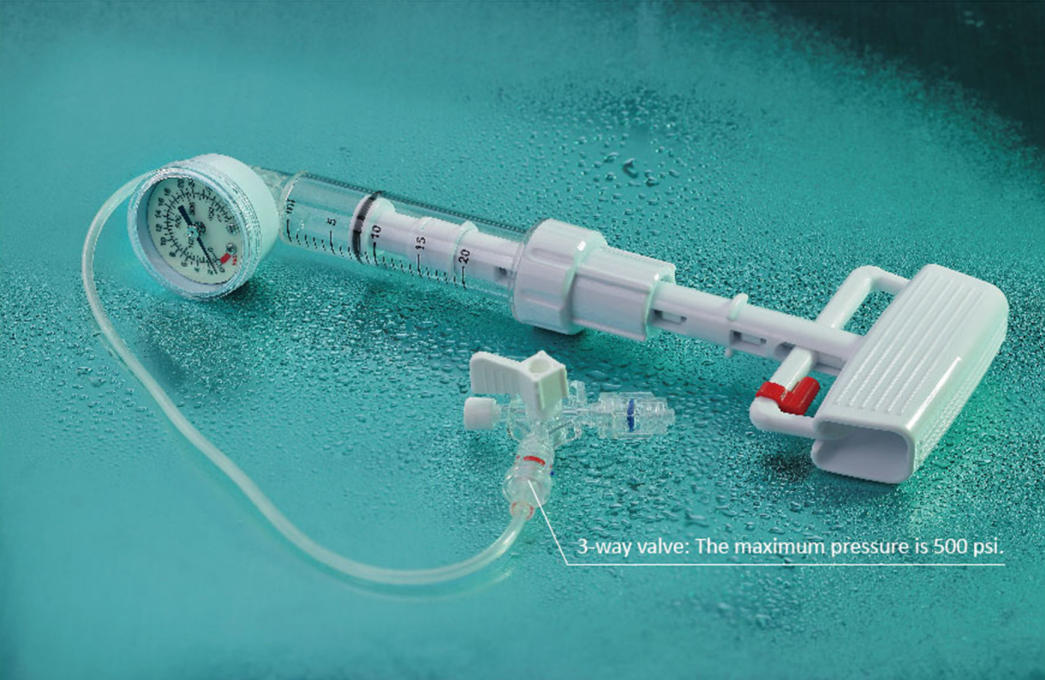
A ≥400 PSI catheter is theoretical if the inflation device cannot hold pressure and be read. The CHANGMEI Balloon Inflator BI-20A-10 specifies a 20 cc nominal capacity and a 30 atm maximum pressure, and is supplied preconfigured with a 10 ml syringe. Construction: polycarbonate barrel, threaded sleeve, three-way valve and joint; polyurethane connecting tube; silicone rubber piston; POM pull rod; PC/ABS push rod and ergonomic handle. A screw-fixed fluorescent pressure gauge supports dial reading in low light.
The inflator is EO-sterilised and single-use, CE MDR certified and NMPA China Class II certified, and certified under Regulation (EU) 2017/745 Annex XI Part A. If you are assembling an 11G tray, the inflator is a line item on the same purchase specification as the catheter.
9. Aligning the catheter with the Kyphoplasty Tool Kit KT-00-05
KT-00-05 is the 11G partner for the S1 catheters. It is CE-marked (CE 0123) and ISO 13485-certified, EO-sterilised and single-use, and each kit contains a nine-piece loadout: 2 puncture expandor modules (KT-07-01) for controlled tract dilation, 1 bone drill (KT-09-01) for cortical penetration, and 6 bone cement filling devices (KT-08-01) for controlled PMMA delivery.
Metallurgy matters for acceptance because it is checkable. Most metal parts — cannulas, expandor shafts, bone drill body, guide wire core — use 06Cr19Ni10 medical-grade stainless steel; the puncture stylet and puncture expandor cutting tips use 32Cr13Mo stainless steel; all joints are rated ≥100 N connection strength. The 8G counterpart, KT-00-01, is a fourteen-piece set built around the same material logic and pairs with the 8G catheters.
Step-by-Step: Turning the Parameters Into a Purchase Specification
The sequence below is deliberately ordered. Each step eliminates options that later steps cannot rescue.
Step 1 — Fix the gauge from the access plan. Decide 11G or 8G before anything else. Write the gauge and the corresponding tool kit model in the same line of the specification (11G with KT-00-05; 8G with KT-00-01).
Step 2 — Match channel ID to the largest device you will pass. State the requirement as a floor: ≥3.10 mm for the 11G configuration, ≥3.65 mm for the 8G configuration. Then list the devices that must pass through the shaft.
Step 3 — Choose the marker span per level, not per order. Specify 10 mm, 15 mm or 20 mm and keep the span visible in the item description. If a hospital stocks only one span, say which span and why; mixed-span stock without a stated rule is a reconciliation problem at goods-in.
Step 4 — Set the volume ceiling. Publish the maximum inflation volume per model (3 cc, 4 cc or 6 cc) and state that it is a ceiling, not a target.
Step 5 — Confirm overall length. 280 mm for 11G, 315 mm for 8G. Cross-check against the kit cannula length and the trajectories you use.
Step 6 — Write the pressure clause in three parts. Catheter constrained burst pressure ≥400 PSI; factory pressure and seal testing on 100% of units; inflator maximum pressure 30 atm with a readable gauge. A pressure clause that names only the catheter is incomplete.
Step 7 — Specify sterilisation and shelf life. EO-sterilised, single-use only, validated 3-year shelf life, no re-sterilisation. Add the requirement that the IFU travels with the shipment.
Step 8 — Assemble the acceptance document pack. Request each certificate separately, with its number, issuing body and expiry date. The table in the next section lists what a complete pack contains for this product family.
Where Each Configuration Fits
11G standardisation in a tertiary spine programme. A hospital that has standardised on an 11G access set buys KB0210S1, KB0115S1 and KB0120S1 as one family with a common 280 mm length and a common ≥3.10 mm channel, and pairs all three with KT-00-05. The advantage is a single tray logic across three marker spans, with volume as the only clinical variable.
Single-span, small-volume use in an ambulatory or interventional pain setting. Where the working footprint is deliberately contained, KB0210S1 (10 mm span, 3 cc ceiling, 11G) carries the least volume in the range and still sits inside the ≥400 PSI and ≥3.10 mm specification. The 2025 Medicare ASC rate for kyphoplasty (approximately USD 3,510.84 under CPT 22513/22514) makes per-case reproducibility more valuable than maximum capability in this setting.
Distributor portfolio building. A distributor serving both hospital and ASC accounts needs both gauges, because the gauge decision is made by the account, not by the distributor. The efficient portfolio is three spans × two gauges, with one inflator model covering both: BI-20A-10 is listed against the 8G KB0210 system and the 11G KT-00-05 system, and its 20 cc / 30 atm specification is common to both.
Technique-specific reference. CHANGMEI's application record includes a vertebral compression fracture case using the egg-shell technique in Kuwait, a configuration in which balloon containment and marker placement are central to the technique. That is a reference case rather than a product claim; the parameter logic above still governs which model is selected.
Comparison Tables: Specifications, System Pairing and Acceptance Documents
Table 1 restates the KB-series parameters as they appear in the product data. Nothing in this table is inferred; if a value is not listed for a model, it is because the specification does not state it.
| Model | Size / Type | Marker Distance | Channel ID | Overall Length | Max Volume | Constrained Burst Pressure |
|---|---|---|---|---|---|---|
| KB0210 | 8G | 10 mm | ≥3.65 mm | 315 mm | 4 cc | ≥400 PSI |
| KB0115 | 8G | 15 mm | ≥3.65 mm | 315 mm | 4 cc | ≥400 PSI |
| KB0120 | 8G | 20 mm | ≥3.65 mm | 315 mm | 6 cc | ≥400 PSI |
| KB0210S1 | 11G | 10 mm | ≥3.10 mm | 280 mm | 3 cc | ≥400 PSI |
| KB0115S1 | 11G | 15 mm | ≥3.10 mm | 280 mm | 4 cc | ≥400 PSI |
| KB0120S1 | 11G | 20 mm | ≥3.10 mm | 280 mm | 6 cc | ≥400 PSI |
Table 2 shows how the parameters translate into a system pairing. The gauge match is the constraint that cannot be relaxed.
| System Configuration | Balloon Catheter | Tool Kit | Inflator | Gauge Match Required |
|---|---|---|---|---|
| 11G, 10 mm span | KB0210S1 (3 cc, 280 mm, ≥3.10 mm) | KT-00-05 (11G, CE 0123) | BI-20A-10 (20 cc, 30 atm) | Yes |
| 11G, 15 mm span | KB0115S1 (4 cc, 280 mm, ≥3.10 mm) | KT-00-05 (11G, CE 0123) | BI-20A-10 (20 cc, 30 atm) | Yes |
| 11G, 20 mm span | KB0120S1 (6 cc, 280 mm, ≥3.10 mm) | KT-00-05 (11G, CE 0123) | BI-20A-10 (20 cc, 30 atm) | Yes |
| 8G, 10 mm span | KB0210 (4 cc, 315 mm, ≥3.65 mm) | KT-00-01 (8G) | BI-20A-10 (20 cc, 30 atm) | Yes |
| 8G, 15 mm span | KB0115 (4 cc, 315 mm, ≥3.65 mm) | KT-00-01 (8G) | BI-20A-10 (20 cc, 30 atm) | Yes |
| 8G, 20 mm span | KB0120 (6 cc, 315 mm, ≥3.65 mm) | KT-00-01 (8G) | BI-20A-10 (20 cc, 30 atm) | Yes |
Table 3 is the acceptance document list. Request each line item separately; a consolidated “system certificate” is not a substitute, because the scopes differ.
| Document | Reference Number | Scope / Applies To | Issuing Body |
|---|---|---|---|
| EU Quality Management System Certificate (MDR), Class IIa and Class IIb, Annex IX Chapters I and III | G100888750012 Rev. 01 | Kyphoplasty balloon catheters (KB0210, KB0115, KB0120, KB0210S1, KB0115S1, KB0120S1), KT-00-01, KT-00-05 | TÜV SÜD Product Service GmbH |
| EU Quality Assurance Certificate (MDR), Class I sterile, Annex XI Part A | G21 088875 0011 Rev. 00 | Balloon Inflator BI-20A-10 | TÜV SÜD Product Service GmbH |
| Quality Management System Certificate, ISO 13485:2016 | Q5 088875 0008 Rev. 05 | Design, development, production and distribution of disposable sterile medical devices | TÜV SÜD Product Service GmbH |
| FDA 510(k) Premarket Notification | K223709 | Kyphoplasty Balloon Catheter (Product Code HRX, Class II, 21 CFR 888.1100) | U.S. FDA |
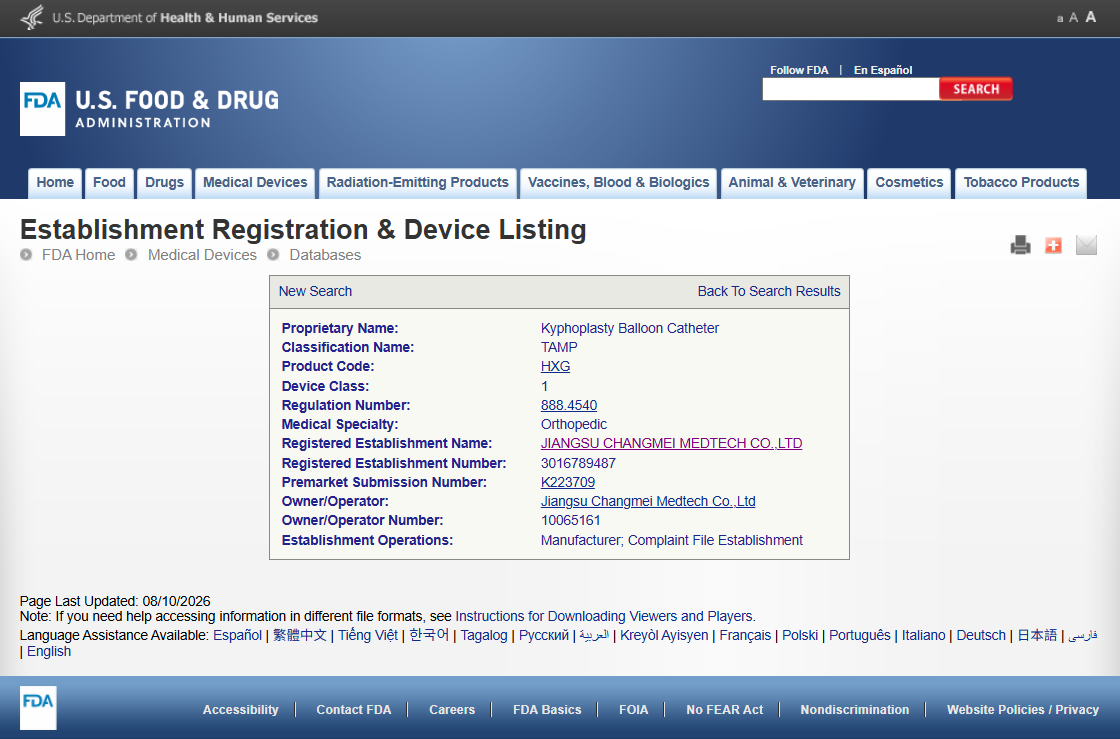
| FDA Establishment Registration & Device Listing | 3016789487 | Balloon Inflator; Kyphoplasty Tool Kit (KT-00-01, KT-00-05) | U.S. FDA |
| CE marking for instrument set | CE 0123 | Kyphoplasty Tool Kit KT-00-05 and KT-00-01 | Per manufacturer declaration |
| NMPA China Class II | Refer to certificate copy | Balloon Inflator BI-20A-10 | NMPA (China) |
FAQ
Which regulatory documents should be on file before accepting a CE MDR kyphoplasty system?
Three documents form the European backbone, and they do not have the same scope. The EU Quality Management System Certificate under MDR (EU) 2017/745 Annex IX Chapters I and III, certificate G100888750012 Rev. 01, covers Class IIa and Class IIb devices and applies to the kyphoplasty balloon catheter range, KT-00-01 and KT-00-05. The EU Quality Assurance Certificate under Annex XI Part A, certificate G21 088875 0011 Rev. 00, covers the Class I sterile Balloon Inflator BI-20A-10. The ISO 13485:2016 Quality Management System Certificate, Q5 088875 0008 Rev. 05, covers design, development, production and distribution of disposable sterile medical devices. All three are issued by TÜV SÜD Product Service GmbH. For the United States, add the 510(k) clearance K223709 for the balloon catheter and the FDA Establishment Registration & Device Listing 3016789487 for the inflator and tool kits. Check expiry dates on each certificate rather than on a summary sheet.
Does an 11G kyphoplasty balloon catheter work with an 8G tool kit?
No. The gauge match is a mechanical requirement, not a preference. The 11G catheters — KB0210S1, KB0115S1 and KB0120S1 — specify a channel ID of ≥3.10 mm and a 280 mm overall length, and they pair with the 11G Kyphoplasty Tool Kit KT-00-05. The 8G catheters — KB0210, KB0115 and KB0120 — specify a channel ID of ≥3.65 mm and a 315 mm overall length, and they pair with the 8G Kyphoplasty Tool Kit KT-00-01. Both families are specified at ≥400 PSI constrained burst pressure, so burst pressure does not compensate for a gauge mismatch.
What does ≥400 PSI constrained burst pressure actually cover, and how is it verified?
It is the pressure ceiling of the balloon when inflated against a mechanical constraint, which is the relevant condition inside a vertebral cavity. Every KB-series model carries the same ≥400 PSI specification. Verification has two parts: the manufacturer states that 100% of units pass factory pressure and seal testing, and the inflation device must be capable of building and holding pressure with a readable gauge — the BI-20A-10 specifies 30 atm maximum pressure and a screw-fixed fluorescent gauge. Note that ≥400 PSI is a floor, not a procedural target; the actual inflation pressure is determined by vertebral body resistance and the IFU.
What should be checked on a sample or at goods-in inspection?
Verify the model code against the four values it encodes: marker distance (10 mm, 15 mm or 20 mm), gauge (11G or 8G), overall length (280 mm or 315 mm) and maximum volume (3 cc, 4 cc or 6 cc). Confirm the channel ID matches the largest device you intend to pass. Confirm the pouch shows EO sterilisation and single-use marking, and that the validated shelf life is 3 years. Confirm the carton carries the certificate references that apply to that line item. Finally, confirm the catheter will seat in the tool kit you hold in stock — a 3.10 mm channel catheter in an 8G tray is a rejected delivery, not a clinical decision.
What are the MOQ and lead time, and how do I request a sample or quotation?
For standard in-stock products the MOQ is 10 sets; for OEM/ODM orders the minimum quantity is negotiable against the specific requirement, and customisation covers balloon diameter and length, cannula size and length, handle colour and logo, packaging design, and product labelling and language. Lead time is 30–45 days, with monthly capacity of 500,000 units and annual kyphoplasty balloon catheter output of 1,000,000 units. To move from evaluation to a documented quotation or a sample request, contact Jiangsu Changmei Medtech Co., Ltd. at No.27 Xinke West Road, Luoyang Town, Wujin District, Changzhou City, Jiangsu Province, China; email cyz@czmed.com; tel/WhatsApp +86 138-1368-7682. The full 8G and 11G product data is in the CHANGMEI kyphoplasty system catalogue.
Conclusion
The specification decision comes down to four checks made in a fixed order. First, fix the gauge, because it decides which tool kit — and therefore which channel ID and length — is even available. Second, select the marker span for the level you are treating: 10 mm, 15 mm or 20 mm, available in both gauges. Third, set the volume ceiling, remembering that gauge does not predict volume: KB0210S1 is 3 cc at 11G while KB0210 is 4 cc at 8G. Fourth, close the pressure chain across catheter, inflator and factory testing, and attach the certificate numbers that apply to each line item rather than to the order as a whole.
Applied to the CHANGMEI KB series, that yields a clean matrix: three marker spans, two gauges, one ≥400 PSI floor, one 30 atm inflator and two tool kits — KT-00-05 for 11G and KT-00-01 for 8G. Once the matrix is written into the purchase specification, the remaining variables are commercial rather than technical.
Next step. Send your level mix and access-set gauge to CHANGMEI and request a specification sheet mapped to your tray, plus a sample for imaging and pass-through verification. Email cyz@czmed.com or use WhatsApp +86 138-1368-7682; product data and certificates are published at www.czmed.com, and the catalogue is available for download here.
Have Questions or Need More Details?
Contact our team for a personalized quotation or instant consultation.
Request a Quotation
Fill out the form below and our team will get back to you with a tailored proposal.
WhatsApp Direct Chat
Prefer to chat in real-time? Message us on WhatsApp for instant assistance & quick answers.
- Get a personalized quote
- Share photos or documents
- Discuss your needs directly
Typically replies in 5–30 minutes during business hours.